Skewer guide
How can you tell a real kebab skewer from an industrial one?
Verified 5 August 2026
A skewer’s origin cannot be confirmed from appearance alone. The reliable approach is to verify who prepares the meat, where it is assembled and whether the restaurant can identify its recipe and supplier.
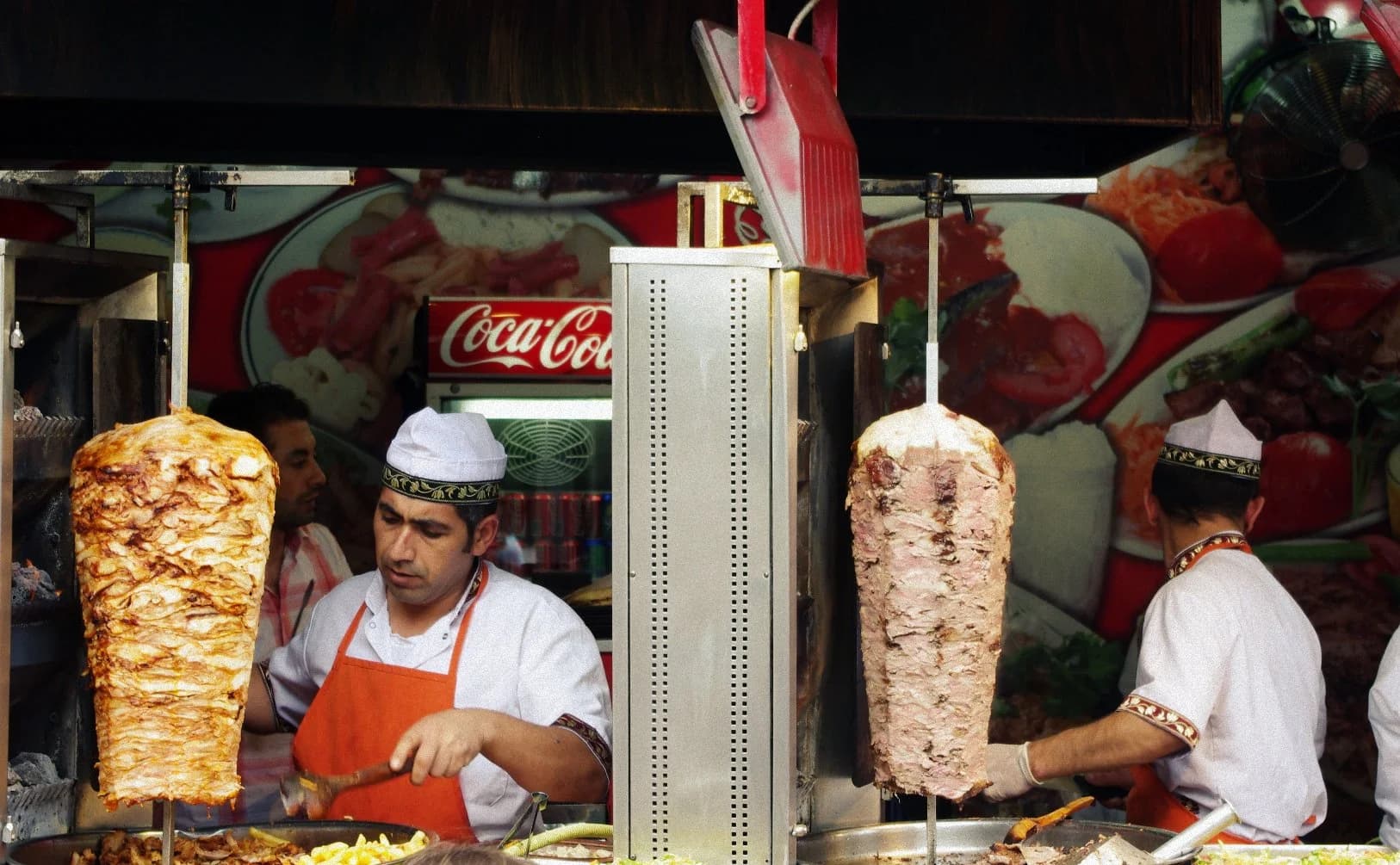
The three Dönerstag categories
Production method and taste are separate facts. A homemade skewer is not automatically excellent, and a custom butcher-made skewer is not industrial.
- Homemade: prepared, seasoned and assembled at the restaurant.
- Artisan: a restaurant-specific recipe produced by an identified butcher or partner.
- Industrial: a standard skewer supplied by a manufacturer.
Clues of a genuine kebab skewer
Irregular layers, visible whole cuts, varying thickness and hand slicing can suggest artisan production. A highly uniform texture and shape may suggest standardised production.
None of these signs is proof: artisan skewers can look regular and industrial skewers can also show layers. Dönerstag displays a production badge only after verification.
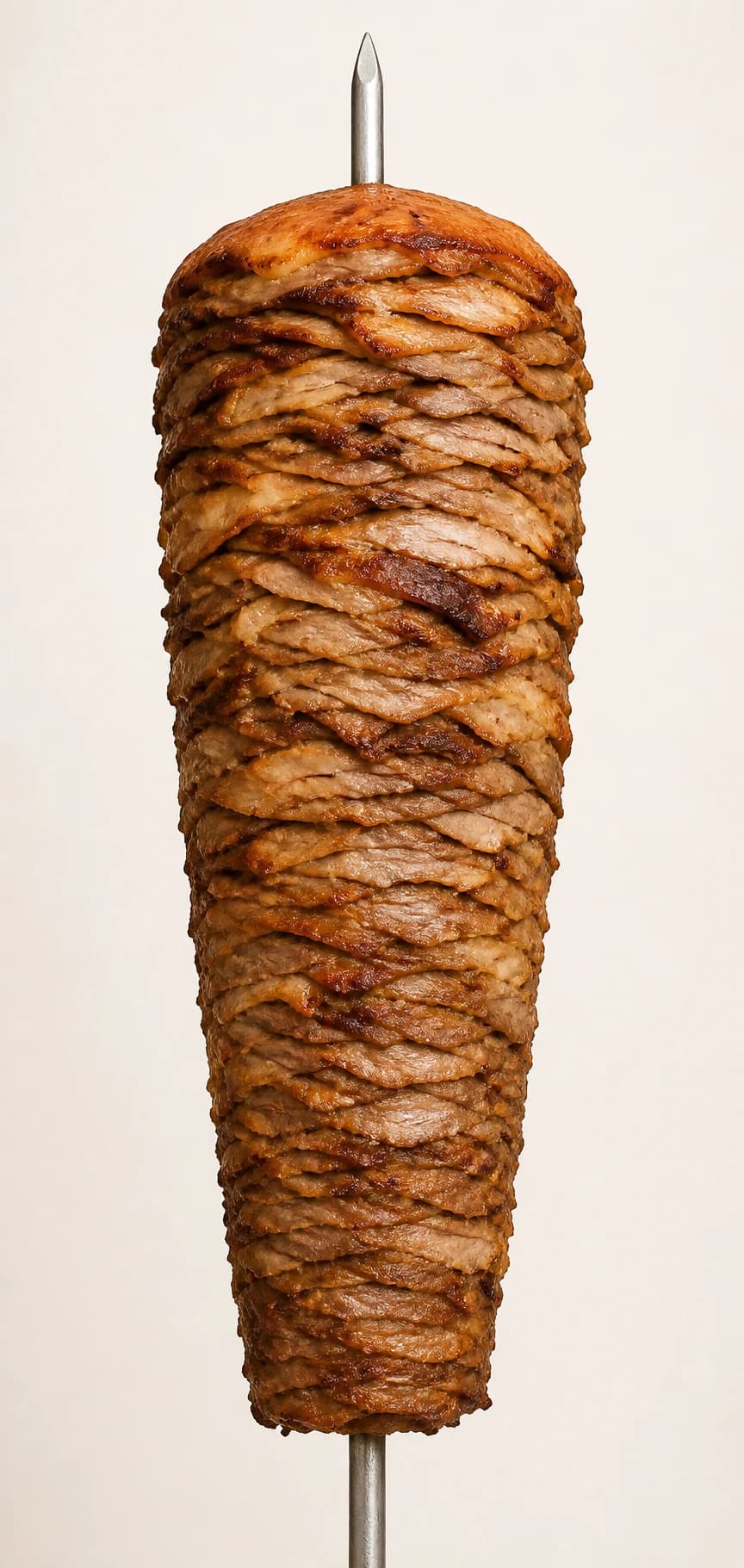
Yaprak
Stacked slices of whole meat
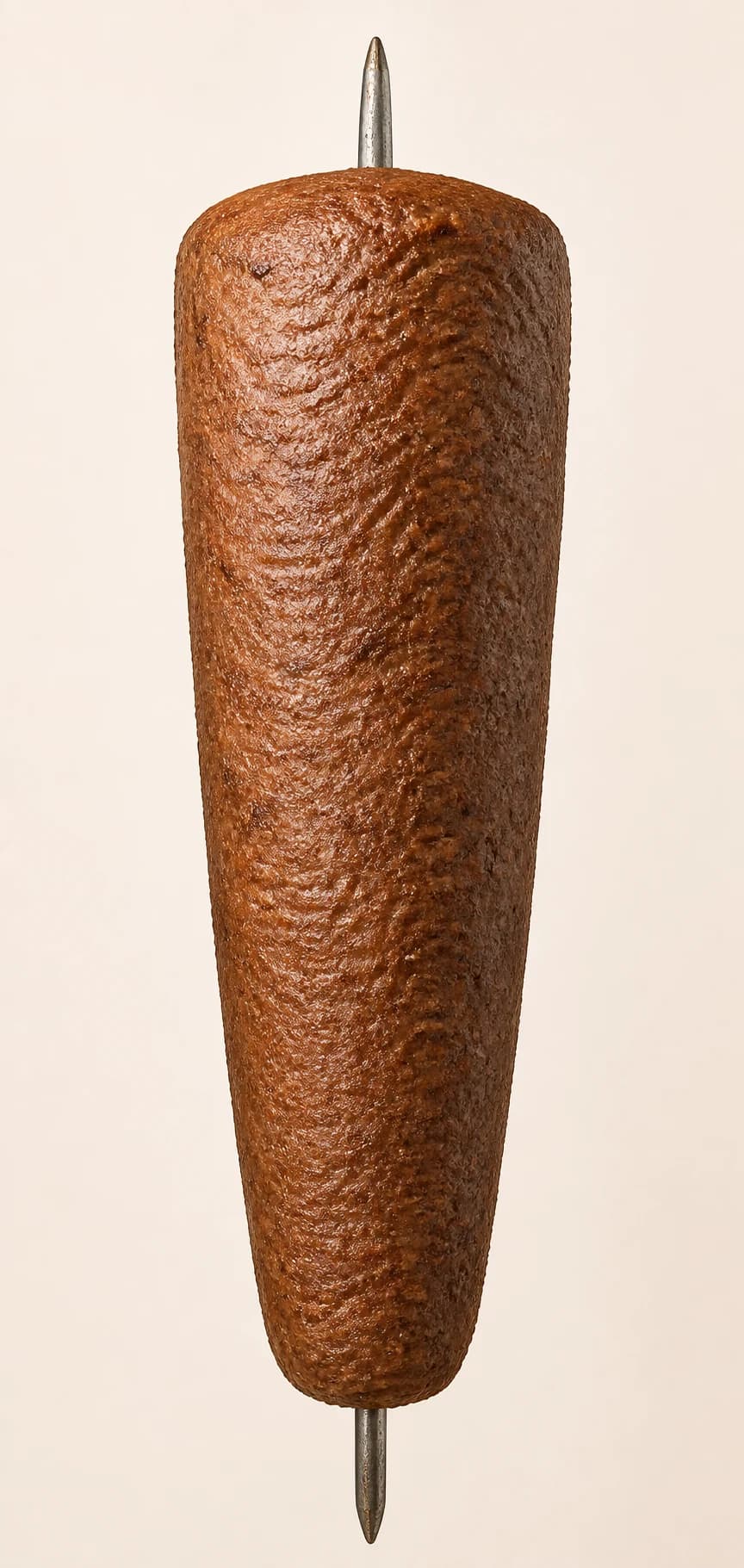
Kıyma
Uniform minced-meat mass
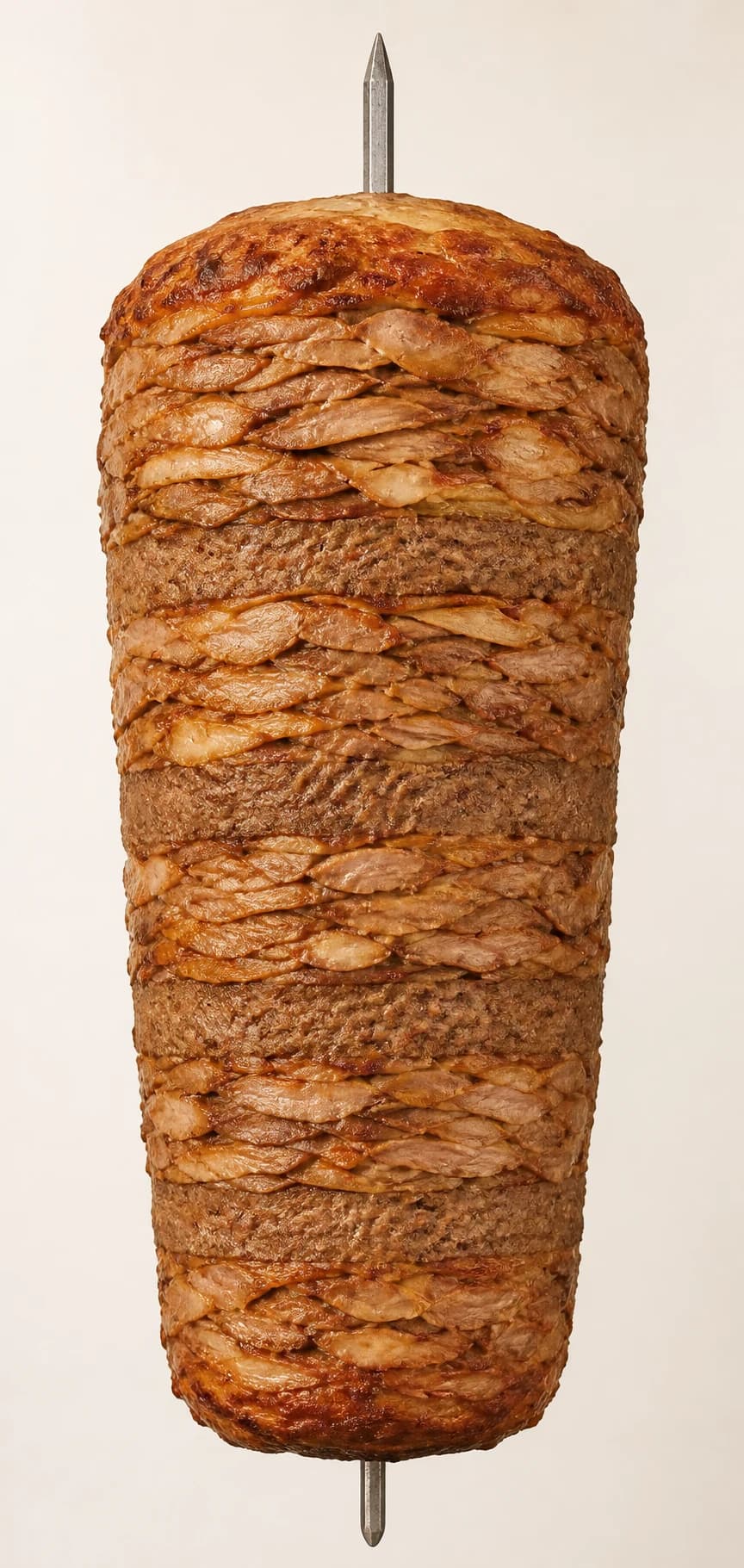
Karışık
Slices combined with minced meat
Questions worth asking
Precise sourcing information is more useful than visual guesswork.
- Is the skewer assembled in the restaurant?
- Is a partner butcher following a custom recipe?
- Which animals and cuts are used?
- Are meats mixed or offered separately?
Why terminology matters
The Swiss food safety authority lists kebab among meat preparations. That regulatory category describes the product; it is not a quality score. Dönerstag adds the separately verified production method.
Sources and verification
Sources support the terms and rules cited here. Restaurant badges are verified separately by Dönerstag.